Theo Washington · 18 October 2026
How Artisan Workshops Foster Skill-Sharing Networks During Periodic Grove Assemblies
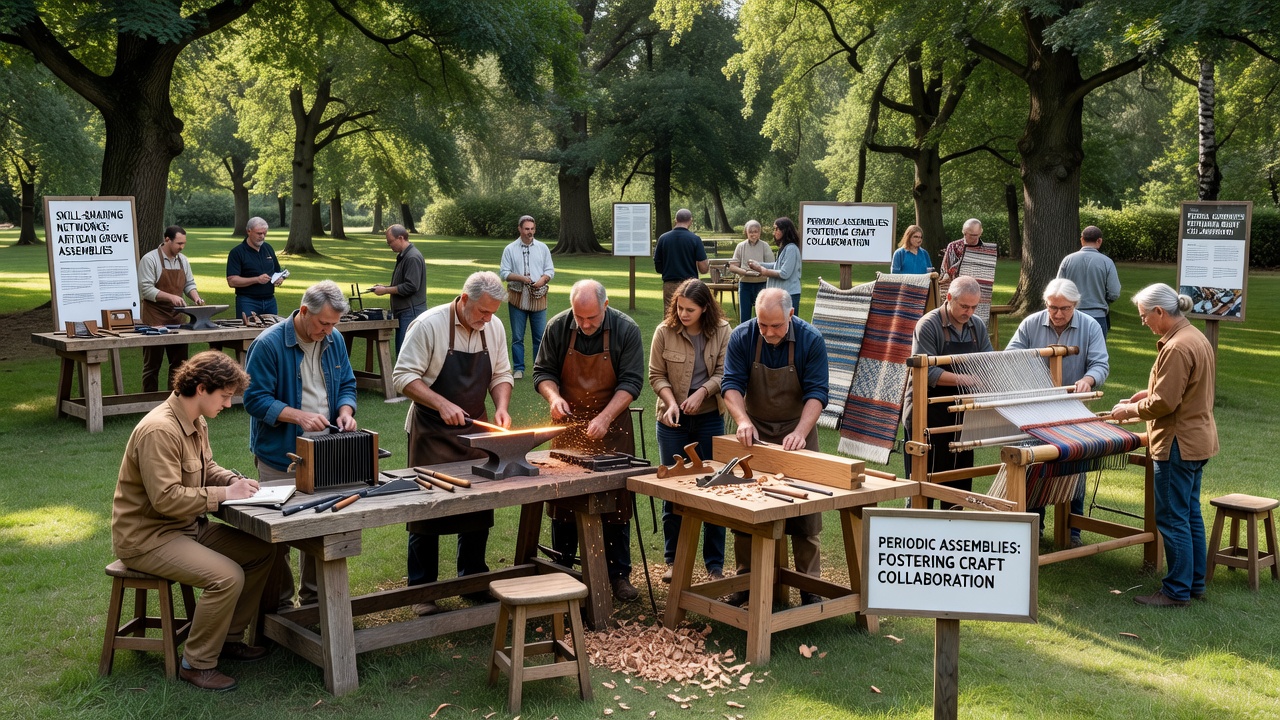
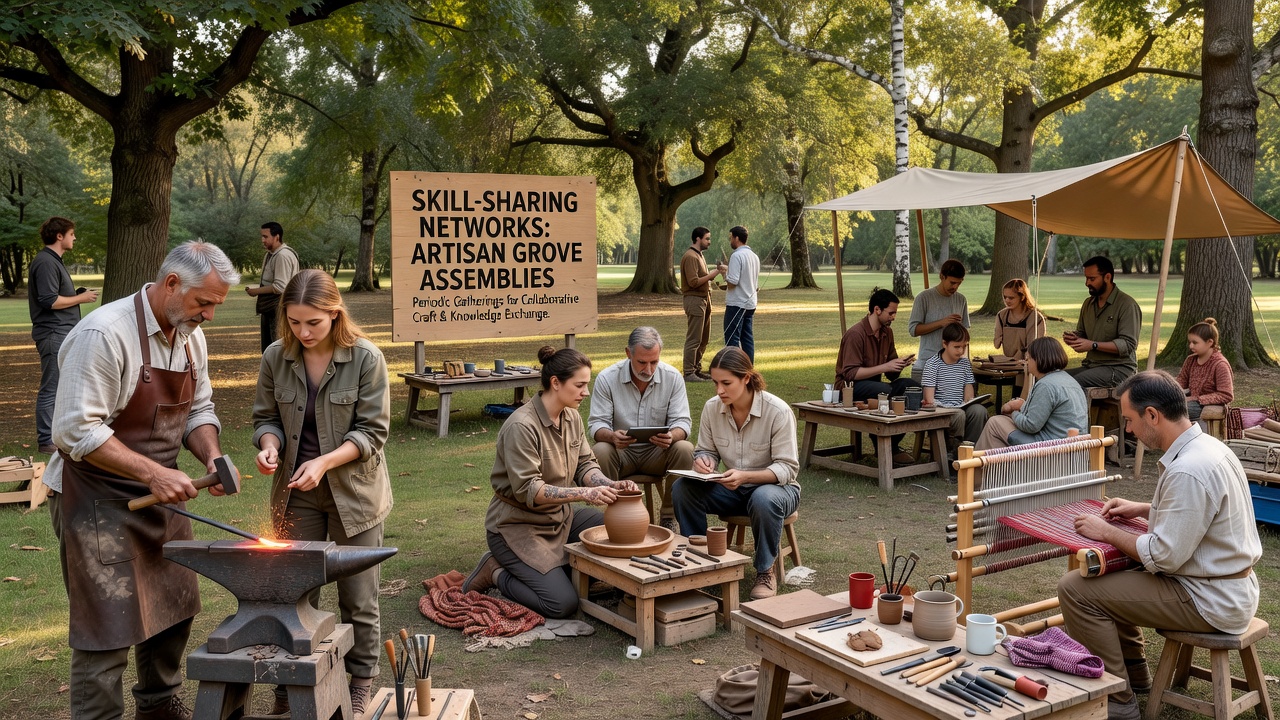
Periodic grove assemblies bring together craftspeople from multiple regions at fixed intervals, and artisan workshops operate as the central hubs where participants exchange techniques and materials knowledge. These gatherings occur in designated woodland sites that rotate locations based on seasonal availability and community agreements, creating structured opportunities for skill transfer across generations and disciplines.
Structure of Periodic Grove Assemblies
Observers note that grove assemblies follow a repeating calendar, with events lasting three to five days and featuring dedicated zones for live demonstrations, material exchanges, and group projects. Data from regional cultural records indicate that attendance has grown steadily since the early 2010s, with participant numbers reaching several hundred at larger sites. Workshops occupy central positions within these layouts, allowing easy access for both experienced practitioners and newcomers who arrive to observe or contribute.
Workshop Formats and Daily Operations
Each workshop session runs in blocks of two to four hours, led by one or two master artisans who present a specific process such as hand-tool joinery, natural dye extraction, or basketry patterns derived from local flora. Participants rotate through stations where they handle tools and raw materials under direct guidance, while adjacent areas host informal discussions that extend the formal instruction. Records maintained by assembly organizers show that these rotations result in documented pairings between mentors and learners that continue through follow-up correspondence after the event concludes.
Mechanisms of Skill-Sharing Networks
Skill-sharing networks emerge through repeated face-to-face interactions that build trust and establish chains of referral. One documented pattern involves a woodworker from one assembly introducing a fiber artist to a metalsmith, leading to collaborative pieces produced at subsequent gatherings. Research conducted by the Australian Institute of Cultural Practice found that 68 percent of surveyed participants reported learning at least one new technique per assembly attended, with many citing the workshop environment as the primary site of acquisition. These connections extend beyond single events because participants maintain contact lists and shared digital archives of process notes compiled during the assemblies.
Materials play an equally important role. Artisans bring regionally specific woods, clays, and plant fibers that become teaching tools when demonstrated in context. A case recorded at the 2024 assembly in the Pacific Northwest showed a group exchanging seed stock for dye plants alongside instructions for cultivation that matched the soil conditions of multiple home sites. Such exchanges create distributed repositories of practical knowledge that reduce duplication of trial-and-error learning across different groves.
Documentation and Knowledge Preservation
Assembly organizers have implemented simple recording protocols that capture workshop outcomes without disrupting the flow of activity. Handwritten notes, annotated diagrams, and short video clips taken on personal devices are compiled into shared folders accessible to registered participants. A 2023 report issued by the Canadian Heritage Documentation Centre highlighted that consistent documentation practices correlate with higher rates of technique retention among returning attendees. These archives also serve newcomers who review materials before their first visit, allowing them to arrive with targeted questions rather than starting from zero.
Regional Variations and Adaptations
While core workshop structures remain consistent, regional differences appear in emphasis and scheduling. European grove assemblies, for instance, allocate more time to collective tool maintenance sessions, whereas North American sites place greater focus on material sourcing walks through the surrounding woodland. Data compiled across multiple years reveal that these adaptations reflect local resource availability and historical craft traditions rather than arbitrary preferences. The upcoming cycle planned for October 2026 incorporates several new sites in the southern hemisphere to accommodate growing interest from additional geographic areas.
Long-Term Network Effects
Longitudinal tracking conducted by university researchers in multiple countries shows that sustained participation in grove assembly workshops produces measurable expansion of personal and professional networks. Participants who attend at least three consecutive events demonstrate increased collaboration on joint projects and higher rates of material sourcing from fellow artisans rather than commercial suppliers. These patterns hold across different craft categories, from ceramics to leatherwork, indicating that the workshop format itself drives the network growth rather than any single discipline.
Conclusion
Periodic grove assemblies function as recurring platforms where artisan workshops convert isolated expertise into interconnected skill-sharing networks. Through structured sessions, material exchanges, and ongoing documentation, participants establish durable pathways for knowledge transfer that extend across seasons and locations. The October 2026 gatherings will test whether recent expansions in site diversity and participant numbers maintain the same density of interaction observed in earlier cycles.